1 word. 38% more bookings.

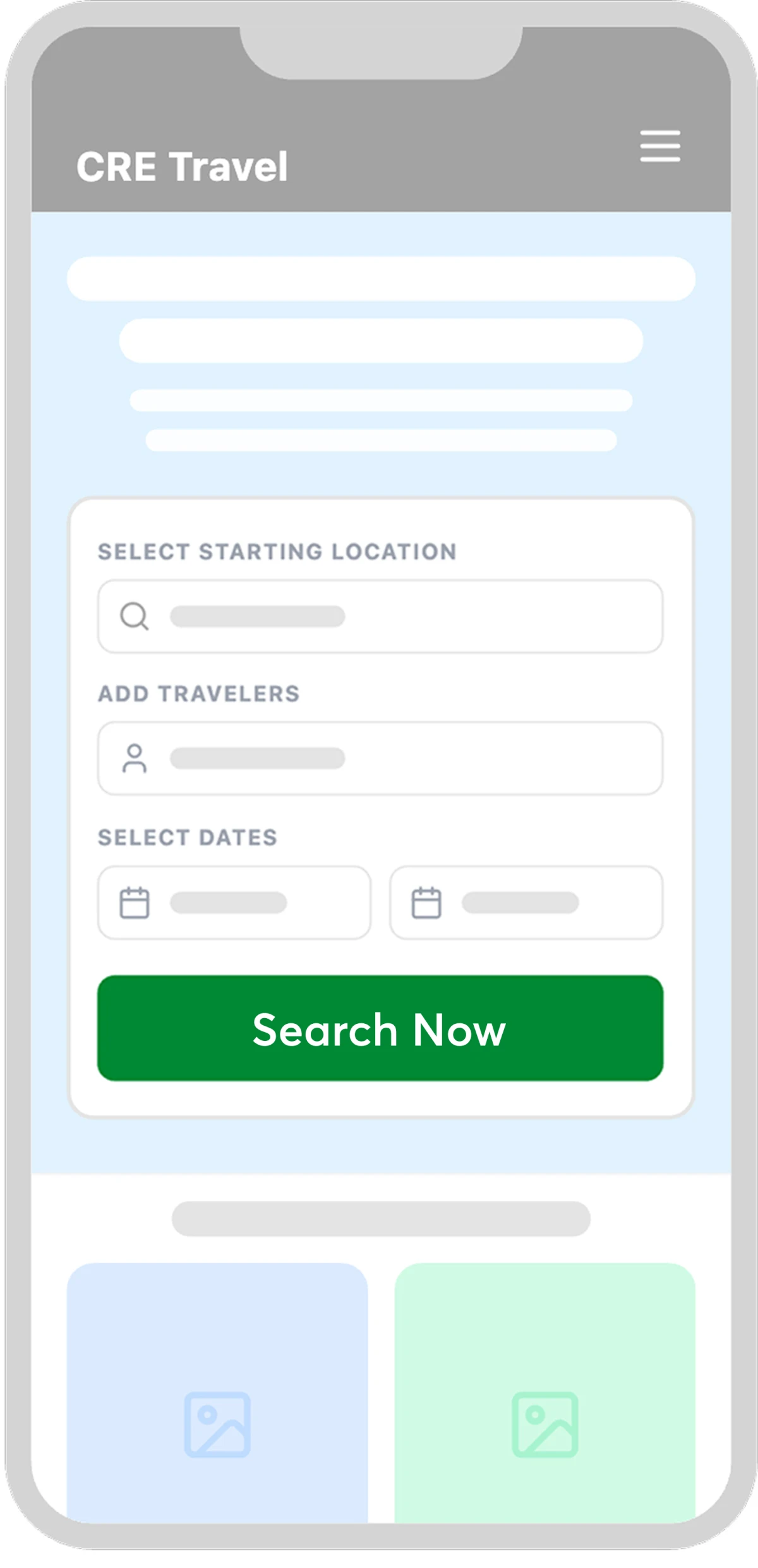
The word “Now” appended to the CTA button. That single word is doing significant psychological work.
1. Urgency Without Pressure
“Now” creates immediacy — it signals that action should happen in this moment, not later. In travel specifically, this matters enormously because trip planning is chronically deferred. Users open travel apps, browse, and close without converting all the time. “Now” interrupts that passive browsing loop and nudges toward commitment.
Critically, it achieves this without being aggressive. It doesn’t say “Book Before It’s Gone” or “Limited Availability.” It’s a soft urgency — more of an invitation than a warning.
2. It Completes a Micro-Conversation
Read the form top to bottom as a conversation:
Select starting location → user provides input
Add travelers → user provides input
Select dates → user provides input
“Search Now” → go, right now, with what you’ve just told us
“Now” closes the loop. It acknowledges that the user has done their part and signals the platform is ready to respond immediately. “Search” alone feels like a label on a tool. “Search Now” feels like a response.
3. Implied Speed and Responsiveness
In digital UX, “Now” implicitly promises fast results. It sets an expectation that the system will respond instantly — which is exactly what users want from a search interface. This reduces hesitation around clicking, because the word pre-answers the subconscious question: “How long will this take?”
4. Active vs. Passive Voice Energy
“Search” is a verb, but sitting alone on a button it reads almost nominally — like a category label (“the Search button”). “Search Now” is unambiguously imperative and active. The addition of “Now” re-activates the verb, making the button feel like an instruction rather than a doorway.
5. Alignment With Travel’s Emotional Register
Travel decisions carry emotional weight — excitement, anticipation, the desire to make something happen. “Now” rhymes emotionally with “yes, let’s actually do this.” It matches the user’s internal momentum at the moment they’ve filled out the form. “Search” is neutral; “Search Now” has a tiny charge of excitement built in.
In summary:
- “Now” creates soft urgency
- It completes the form’s conversation
- It implies speed
- It re-energizes the verb
- It matches travel’s emotional energy